The Mira Scores
dance and be danced
Somatic Dance + Movement Certification
beginning Summer 2027 in San Diego.
“The church says: The body is a sin.
Science says: The body is a machine.
Advertising says: The body is a business.The body says: I am a fiesta.”
—Eduardo Hughes Galeano
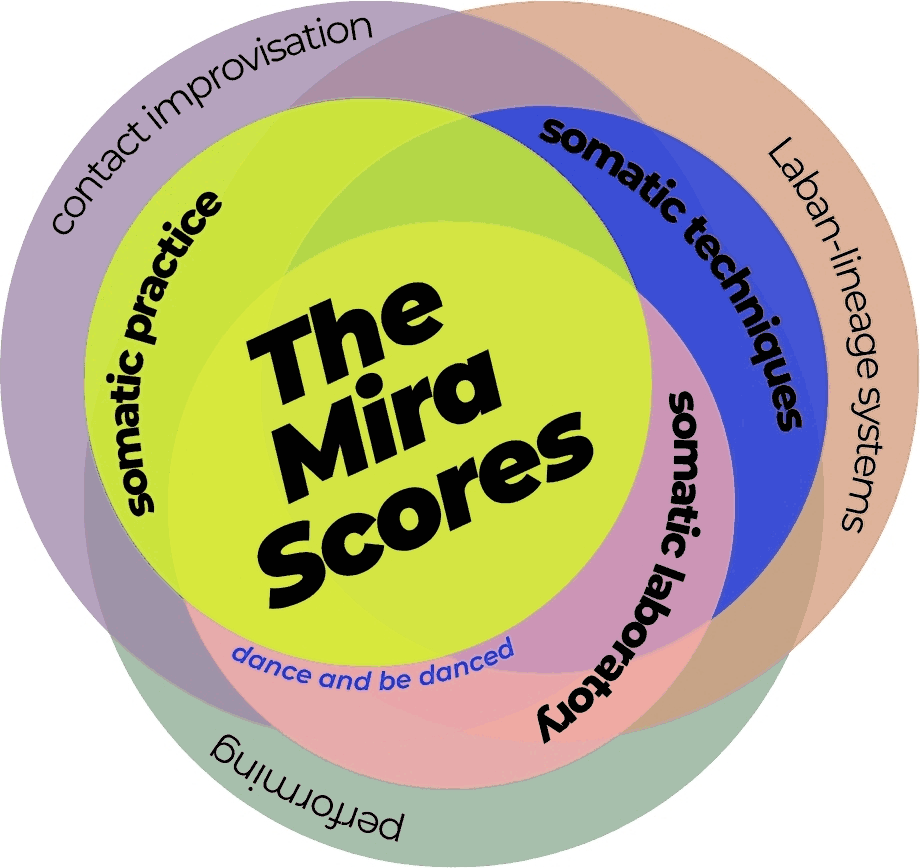
The Mira Scores center dancing as a way of learning somatics, integrating Laban-lineage techniques, contact improvisation, and performance to catalyze a dynamic, responsive, and relational embodiment. In-person modules allow for much-needed IRL deep dives in an increasingly virtual world, and regular, synchronous online Saturday mornings allow for continual practice over the course of the ~1-year certification process. Modules and the spring equinox class are anchored to the turning points of the sun’s yearly cycle. The circadia (daily rhythm) of each module works with our own circadian rhythms, responding to its season’s balance of light and dark.
Mira
From the Latin mirus and mira, meaning wonderful, marvelous, astonishing.
It is the root of miracle, admire, marvel, and mirror, and its verb, mirari, means to wonder at, to look at in astonishment. In Spanish, mira means: look.
Mira, the first pulsating variable star to be discovered, swells and contracts on a cycle of about 332 days, and its light follows the movement inward. When it contracts, the star heats and brightens, and when it expands, it cools and dims. An astronomical paradox.
Somatic approaches to dancing contain a similar rhythm, gathering attention inward toward sensation and extending it outward in expression, each informing the other.
The Mira Scores ask you to look, at your own body, at a person, at the space, and to keep looking until the familiar becomes strange enough to be seen anew. They ask you to linger in the wondering rather than rush to the answer.
How can looking contain the full spectrum of listening, receiving and perceiving from multiple senses?
Score
Old Norse skor and Old English scoru: a notch, a cut, an incision; a count of twenty.
In the early 1700s, it came to mean the lines drawn, or “scored,” across a staff to bind the separate parts of the composition together into one readable whole. The notation became “the score.” The mark that constrains also frames.
In dance and somatics, a score can be a range of things, but the simplest definition is a set of rules or parameters that constrain or frame a movement exploration or performance. They can be questions, perceptual frames, proposals, problems to solve, prompts, provocations… A score can liberate possibilities by setting limitations, similar to what is often called a creative constraint.
Before it was music, a score was a count of 20. From the Middle Ages into the early 1900s, shepherds in the hills of Northern England cut one notch in a tally stick for every twenty sheep.
Twenty is the whole body’s digit count: ten fingers, ten toes. The shepherds’ score, the French quatre-vingts, and the Maya’s fully vigesimal mathematics all count in twenties. Same body, same twenty, invented separately. This score of scores serves as paradoxes that guide The Mira Scores:
Dance has been a specialized fine art for hundreds of years, but humans have been dancing for far longer than that. We danced for healing, courtship, mourning, war preparation, and marking the seasons for tens of thousands of years. Before that, we danced before we even knew why.
“The dancing does the teaching, the teacher points to that.”
—Steve Paxton
The Mira Scores are filled with techniques and practices for integrating body~mind~spirit and tuning the “self as instrument” toward responsiveness, flavor, and clarity (or messiness, because sometimes that’s what’s needed). Whatever your work in the world, The Mira Scores are designed to help you show up for it with guts, grace, heart, and humor.
The Mira Scores is for
dancers
If you’re a trained dancer or a dancer whose relationship to training is complicated, you will get the most out of The Mira Scores if you are willing to both expand and refine how you approach dancing and the study of dance. Expect to have your patterns revealed and the challenge of breaking them to expand the number of choices you have as a dancer.
dance educators
The Mira Scores are a somatic dance pedagogy that will inform your teaching, but you’ll get more out of them if you are willing to let them work on you. You can move the energy in the room better when your body is a clear channel that your dances can move through.
contact improvisers
If you have experience with contact improvisation, this work would serve you best if you loosen your grip on what you think CI is. If you’ve done contact improvisation before but can’t find your way into the larger community because it just doesn’t feel quite right, this context gives you a chance to study it as a somatic practice and to experience contact with another person from a cohort you get to know through intensive study together, as a way of working with somatic techniques. If you’re all about the tricks, you may learn what boredom has to teach you as we focus on what’s before and underneath them.
those who used to dance
…and your life just isn’t the same without it, this will be a new way into dancing again, maybe with even more freedom and choice than you remember. Depending on your training history, it might feel brand new.
those who coulda,
shoulda, woulda danced
…and now really wanna dance and devote themselves to it more fully
If you’ve done yoga or ecstatic dance or other embodiment practice, but never made it into the studio for formal dance training, this is the spacetime to become a dancer, but only if you’re ready and willing to put the work in! Dance asks us to show up whole. At the same time it shows us that a whole self is an orchestra of parts, some we don’t realize we have until dancing surfaces them. If you’re up for that loop of revelation and integration, you’re ready for somatics-centered dance training.
bodyworkers who have
worked with their bodies
If you’ve practiced embodied arts like yoga or tai chi, or grew up doing sports, you know the ins and outs of physical practice. What if you could spread the intelligence within your hands throughout your whole body? How can dancing serve to complement your hands-on practice? What if dancing is a way to move energy through you that might be lingering from sessions?
therapists
What if dancing could deepen and expand your work? What would it feel like to develop a more embodied presence and artful approach to supporting others?
Some of what we do overlaps with somatic movement therapy, somatic psychology, and other therapeutic modalities, but what we do in the studio is not meant to “diagnose, treat, or prevent any disease or mental health condition.” Healing and art making are both nonlinear processes. When we attend to the creative process of our bodies in motion and in relationship rather than naming or aiming at a pathology, therapeutic effects can emerge. When our practices make us feel more whole, we will take note. When we notice healing happening, we will take notes. Being seen by others in performance ups the ante, making it more challenging to stay connected to our interoception, thus expanding our experience of what it means to witness and be witnessed.
When
Begins summer 2027
~250 hours over ~1 year · in-person modules in San Diego + online Saturday mornings
Modules · in person · San Diego
Online Saturdays · 9–11:30 am PT
- 6/12/2027
- 6/19/2027
- Module 0
- 7/3/2027
- 7/10/2027
- or
- 7/24/2027
- 7/31/2027
- Module 0
- 8/14/2027
- 8/21/2027
- 10/2/2027
- 10/9/2027
- 10/23/2027
- 11/6/2027
- 12/4/2027
- Module 1
- 1/8/2028
- 1/22/2028
- 2/5/2028
- 2/19/2028
- 3/18/28Spring Equinox
- 4/1/2028
- 4/15/2028
- 4/29/2028
- 5/13/2028
- 6/10/2028
- Module 2
- 7/8/2028
- 7/22/2028
- Module 3
- 8/26/2028 Integration
Numbers match the dots on the spiral.
Saturdays 9 and 18 run 4 hrs (opening class and spring equinox, respectively).
Rehearsal: 3 hrs on your own, any time in each gap between modules.
Enter your email for more information on the schedule, tuition, and application details.
Why
Why I made The Mira Scores
A few years ago I saw a dear friend dancing on Instagram. I used to babysit her when she was a kid and as far as I knew, dancing had not been a part of her life. I wrote to her right away about how happy I was to see her dancing and asked about the context. She responded, “I’m in a somatic dance certification.”
When she gave me the name of the program, I found the creator’s Instagram. In search of his bio, I clicked through a flashy website, and eventually found it on what appeared to be a separate website. Not a single teacher’s name listed. No somatics lineage, no reference to somatic systems. It was super sexy and looked like a lot of fun, and I imagine the training is bringing the joy of embodiment to a great many people. But something about the way the promises and preaching overshadowed the practices reminded me of so many of somatics certifications I’d seen popping up on social media since the Rona. And since somatics centers first-person experience, it’s like nobody can say it isn’t somatics. It’s unfalsifiable.
The internet democratized information and learning and the pandemic demanded we create more sophisticated online learning platforms and communities. Instagram supercharged the aesthetics and sheer number of “experts”. Don’t get me wrong, I love learning and have benefitted from this access. I’m also lucky to have dived deep into somatics through the 500-hour Integrated Movement Studies (IMS) program before the exponential growth of social media began feeding off the field, so I have an embodied understanding of how deep study with lineage holders not only changes what we know, but transforms the place from which our knowing occurs. It wasn’t until a few years after graduating from IMS that I found Integral Theory and began to understand why my teachers, Peggy and Janice, chose “integrated” as the first word in the title of a certification in Laban/Bartenieff Movement Analysis. In other words, I had integrated a lot of the training before I understood what the word meant.
Early on, a technique is something we apply, laid on top of or next to whatever we’re doing when we’re practicing. Eventually, it becomes part of us and we no longer need to bring it forward consciously for it to support us in the moment. That’s integration. This depth of study under master teachers is necessary if we wish to discern between appropriation, application, and integration. Without integration, it’s hard to understand the downsides of dipping one’s toes into a subject and stitching together shiny representations of practices that took other people a long time to build. With deep study and time, we know in a way that lets us feel the difference between scratching the surface of a subject and sustained study and practice that allows us to bring it into dialogue with our primary expertise. That dialogue begins another level of integration where what is emerging is greater than the sum of its parts.
I shared all this with a student-turned-colleague who knows me and my teaching well. It wasn’t the first time she and I commiserated about this dilution of “somatic” certifications, nor was it the first time she lovingly asked me if I was planning to create a training that had what I felt was missing. I finally really heard her and began to articulate my unique contribution to the field of somatics. The Mira Scores is and are the fruit of over 20 years of studying, researching, and teaching somatics in the context of dancemaking.
Somatics is for everyone AND there’s a rich collection of techniques and (widely varying skillsets? …somthing about how much skill. Different levels of skill in teaching, hands-on work, one’s own somatic awareness and skills?) The field of somatics has ISMETA, which worked to develop a Scope of Practice and Code of Ethics for somatic movement education programs. Somatic movement educators and therapists around the world who have trained within programs and lineages whose material and methods meet the standards can register as RSME/T (Registered Somatic Movement Educator/Therapist), RSDE (Registered Somatic Dance Educator), MSME (Master Somatic Movement Educator), or ASMP (Associate Somatic Movement Educator).
Steve Paxton developed Contact improvisation as a proposal that resists codification. Nobody owns it, anybody can call what they’re doing contact improvisation. This was and is radical. Paxton lived to see the shadow sides of this and I’ve heard stories of him calling out what, in his opinion, was NOT contact improvisation. Still, he chose never to claim ownership.
Contact improvisation has co-evolved with somatics since the 1970s. It’s no coincidence that Bonnie Bainbridge Cohen’s first book, Sensing, Feeling, and Action (1993), is a collection of essays and interviews (many with Nancy Stark Smith) first published in Contact Quarterly.
To be clear, The Mira Scores is not a certification in contact improvisation. It is not merely the application of contact improvisation to somatics or vice versa. It’s a study in this place:
Sources: Bonnie Bainbridge Cohen, Sensing, Feeling, and Action, Introduction. Steve Paxton, Fall After Newton (1987), trailer, Contact Quarterly.
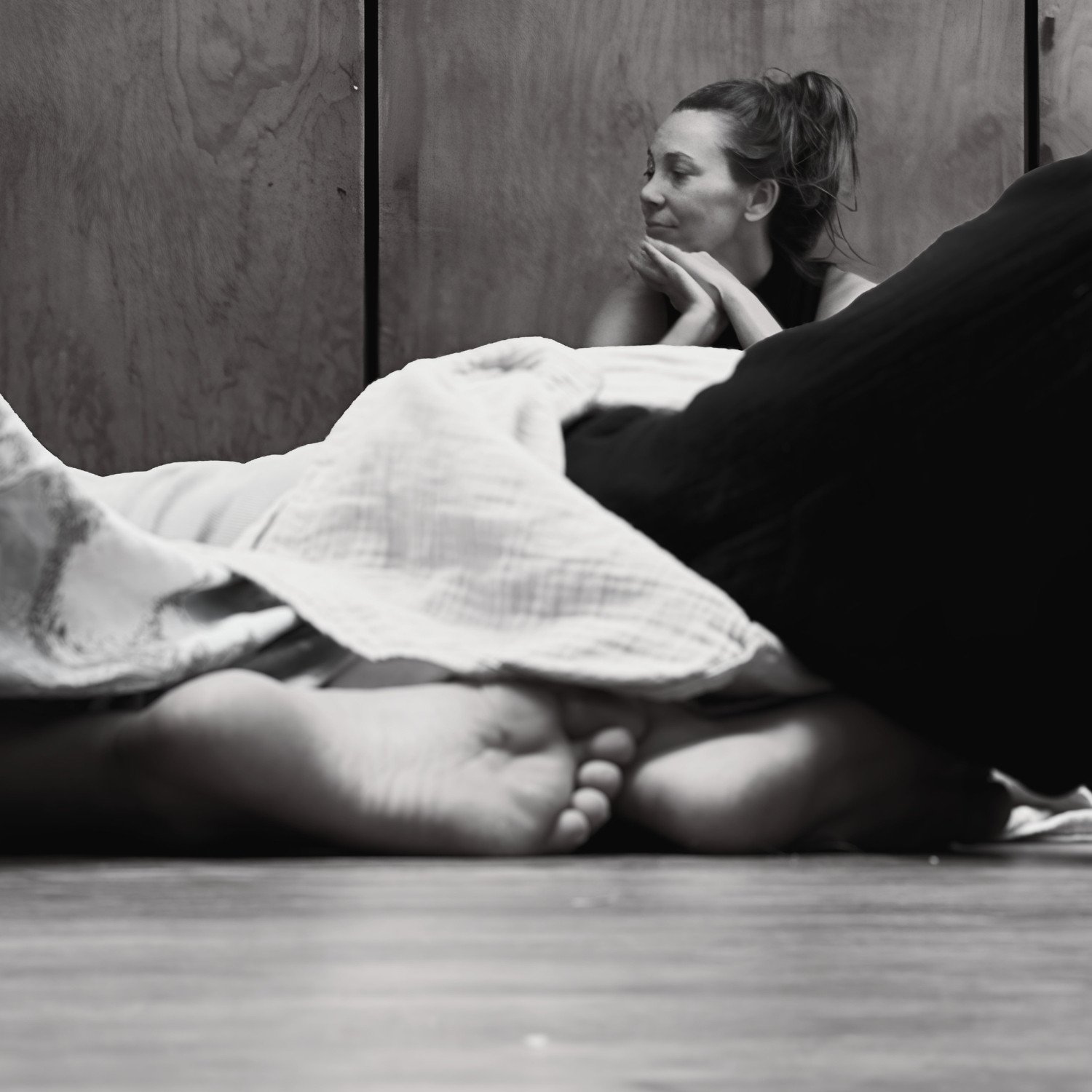
Jessica Humphrey, MFA, MSME, CLMA
Director · Faculty
My movement research began in childhood with gymnastics and continues with dancemaking from various, shifting perspectives, and states of body~mind. My dances are expressions of my engagement with paradox, contemplative and somatic practices, Integral Theory, Practice-as-Research, and reverence for the work of those within whose lineages I move.
Somatics is the fascia of my work as a dance artist and educator.
More about Jessica
I am a Master Somatic Movement Educator (MSME) with ISMETA and a Certified Laban/Bartenieff Movement Analyst through the Integrated Movement Studies program (2006) with primary teachers Peggy Hackney and Janice Meaden. I have studied within The School for Body-Mind Centering® since 2015 and have one module remaining in the Somatic Movement Educator program at Moving Within with primary teacher Mary Lou Seereiter. I certified in Dance-Specific Pilates through Body Arts and Sciences International (2002) with Karen Clippinger and Rael Isacowitz, have studied the Feldenkrais Method® by immersion with collaborators Leslie Seiters, Eric Geiger, and Liam Clancy, and Alexander Technique with Marjean McKenna, Eileen Troberman, Luc Vanier, Elizabeth Johnson, and Shelley Senter.
Intensive study with Deborah Hay in 2009 changed my life. While Hay does not identify as a somatic practitioner, her work is deeply somatic. Hay’s questions are somatic koans that keep my dancing, teaching, and curricula alive and immediate.
I have practiced, performed, taught, and researched contact improvisation for more than two decades in the US and Mexico as a dance technique, a somatic practice, and a choreographic method. My teachers include Nancy Stark Smith, Marjean McKenna, Nina Martin, Martin Keogh, Keith Hennessy, Angie Hauser, Andrew Harwood, John Glenn, Jess Curtis, Ray Chung, and Chris Aiken. My MFA thesis at the University of Utah (2008) began my praxis of Nina Martin’s Continuum of Deliberation, a lifelong study in the studio and on stage of the what and how of choreographing our improvisations and improvising our choreography. It has expanded my hands-on work to the whole body and deepened my embodied understanding of the feedback loop between intrapersonal and interpersonal intelligence.
I have co-created several evening-length dances over the past 20 years with artists such as Deborah Hay, Sara Shelton Mann, Gabor Tompa, Guillermo Gomez-Pena’s La Postra Nostra, Leslie Seiters, LIVE, and throughout a 13-year collaboration with Eric Geiger that activated and tuned my aesthetic sensibilities. In 2021, I founded Portal, a transborder platform for somatic experiments in dancemaking and dance education, and I continue to co-facilitate this evolving entity with Miroslava Wilson Montoya in San Diego and Tijuana.
Certification in Integral Facilitation® (Ten Directions, 2019) with Diane Musho Hamilton, Rob McNamara, Cindy Lou Golin, Gabriel Wilson, and Rebecca Ejo Colwell informs my work in the studio, within institutions, and throughout the community. After experiencing the shadow dynamics of horizontal, non-hierarchical group structures, I pursued this training in facilitation, conflict as a creative process, and both top-down and bottom-up leadership techniques. Through this work, I learned that the lexicon we use to describe human relationships is full of metaphors for what’s actually happening physically in contact improvisations.
I am a Professor of Dance at San Diego State University where I have continued to learn through teaching somatics, contact improvisation, and dancemaking, and mentoring students since 2011.
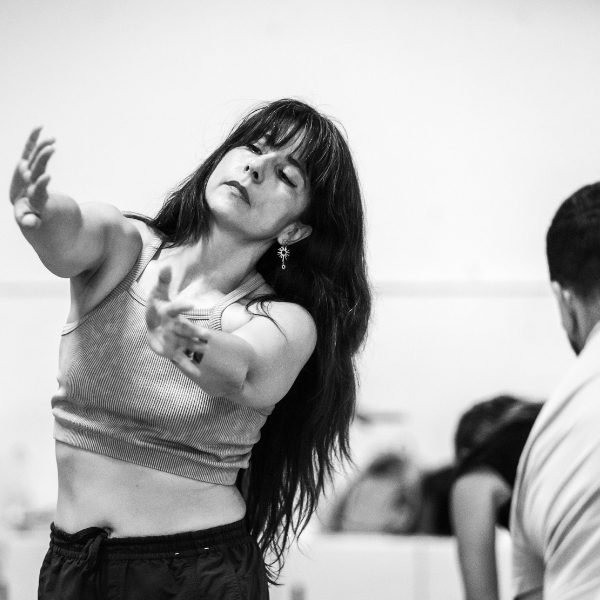
Miroslava Wilson Montoya
Faculty
Choreographer, dancer, somatic movement educator and therapist, director, and producer · Tijuana–Hermosillo, MX
I currently co-direct SomosSomas, a project devoted to cultivating processes of learning, creation, and transformation through somatic practices, movement, and facilitation in community, educational, artistic, and organizational contexts.
More about Miroslava
At the same time, I collaborate with Ayuda para la Vida A.C., an organization dedicated to the prevention of self-inflicted violence among children and youth, where I facilitate workshops on emotional health, creativity, and co-regulation, creating spaces for listening to, feeling, and inhabiting the body.
As a performing artist, my most recent works include Creatura, a participatory choreographic experience developed as both a performance and a workshop, co-created with Briseida López; and Amá, created within PORTAL (Jess Humphrey, Briseida and me), a binational platform for experimental dance research of which I am part. At different times throughout the year, I collaborate as an actress, dancer, and choreographer with Mujeres en Ritual Danza Teatro. For fifteen years, I served as artistic co-director, choreographer, and executive producer of Péndulo Cero Danza Contemporánea, a period during which I developed performance works, educational projects, and community-based processes in Mexico and internationally.
I have had the opportunity to share my artistic work in Japan, China, South Korea, India, Colombia, Chile, Germany, Spain, Guatemala, Argentina, the United States, and across different regions of Mexico.
Again and again, I discover that the body is a living map of experience. From there, I research, create, and share practices rooted in movement as a way of listening, inhabiting, and understanding life.
At this moment, I find myself inhabiting a stage of integration, where my research and practice begin with an understanding of the body as a living territory of interrelations. From this perspective, I design and facilitate sessions, practices, workshops, and performative experiences where movement, perception, and improvisation open possibilities for creativity, care, and transformation. My work is in dialogue with somatics and art, while cultivating an ecofeminist sensibility that understands life as a web of interdependencies.
I have the good fortune of sharing somatic movement, dance, creativity, and improvisation practices with people of different ages and contexts: children, youth, older adults, artists, dancers, and diverse communities. Each time, I am moved by the possibility of fostering spaces where the body can become a place of listening, agency, encounter, and transformation.
Over time, I have come to understand that experience, research, and a sensitive collaboration with each context have guided my formation. This search led me to study contemporary dance at the Escuela Profesional de Danza de Mazatlán, Industrial Engineering at the Universidad de Sonora, and a Master’s degree in Marine Sciences, specializing in Marine Biology, at UNAM. My current specialization is as a Somatic Movement Educator through Body Mind Movement Center México, along with my certification as a facilitator of collaborative conversations grounded in Cultural Biology through Matríztica.
I had the privilege of co-directing the contemporary dance company Péndulo Cero for fifteen years. I am originally from Hermosillo, Sonora, and have lived in Tijuana since 2007—a border city from which I continue developing projects that weave together art, somatics, education, and community.
Enter your email for program details.
No spam.